

أماني الثويني
Amani Al-Thuwaini
أماني الثويني هي فنانة ومصممة كويتية أوكرانية، يستكشف عملها المتعدد التخصصات موضوعات الهوية والذاكرة والتقاطع الثقافي. تتأثر أعمالها بشكل كبير بجذورها المزدوجة وخلفيتها في مجال العمارة. عملت أماني بشكلٍ وثيق مع إحدى ناسجات جمعية السدو لابتكار أعمال فنية مستوحاة من السدو، تعكس تجربتها الشخصية وتُبرز تطوّر السدو كحرفةٍ خالدة ومتجددة، مدعومة بالرمزية المعاصرة للكويت
Amani Al-Thuwaini is a Kuwaiti-Ukrainian artist and designer whose interdisciplinary work explores themes of identity, memory, and cultural collision. Her art is heavily influenced by her dual heritage and her background in architecture. Amani worked closely with one of AlSadu Society’s weavers to create her innovative Sadu-inspired pieces that imparts her individual experience and the evolution of Sadu as a timeless and progressive craft, abetted by the contemporary symbolism of Kuwait.
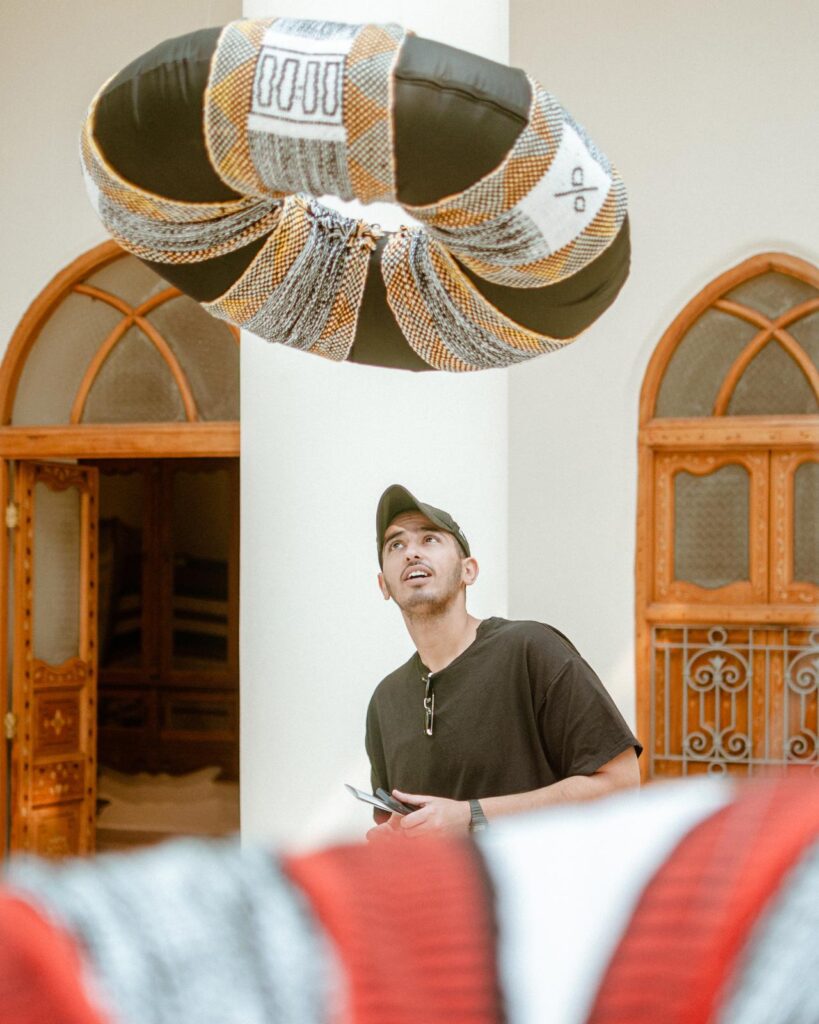
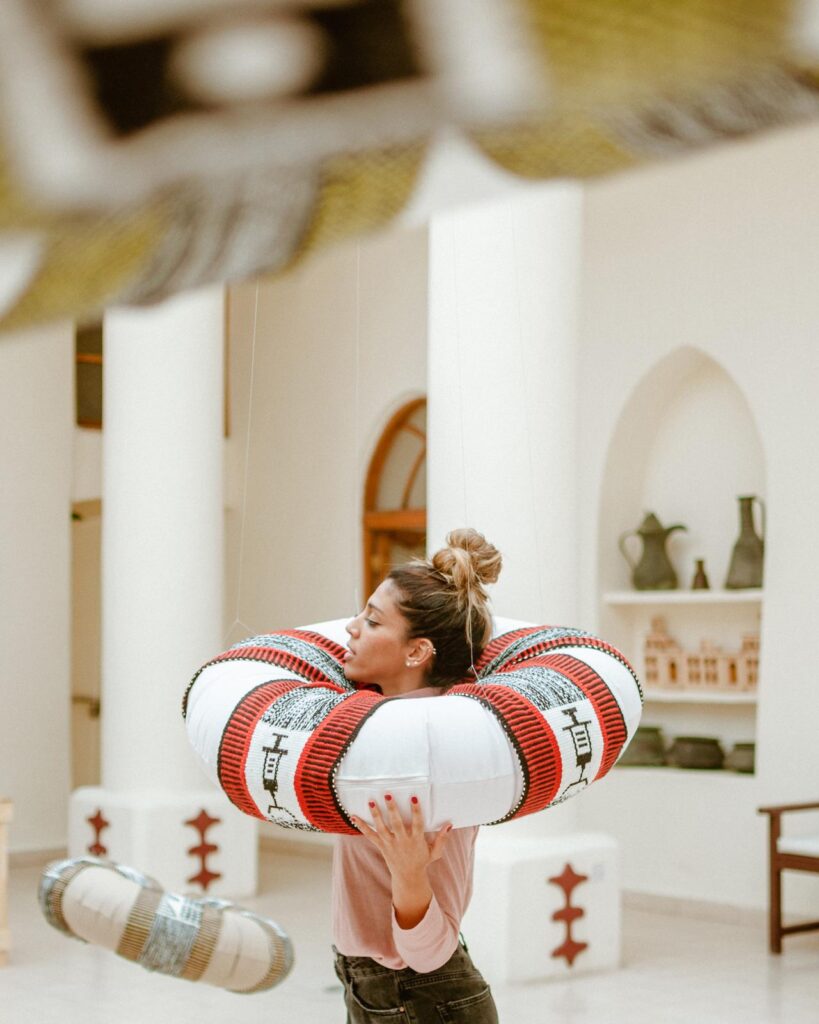
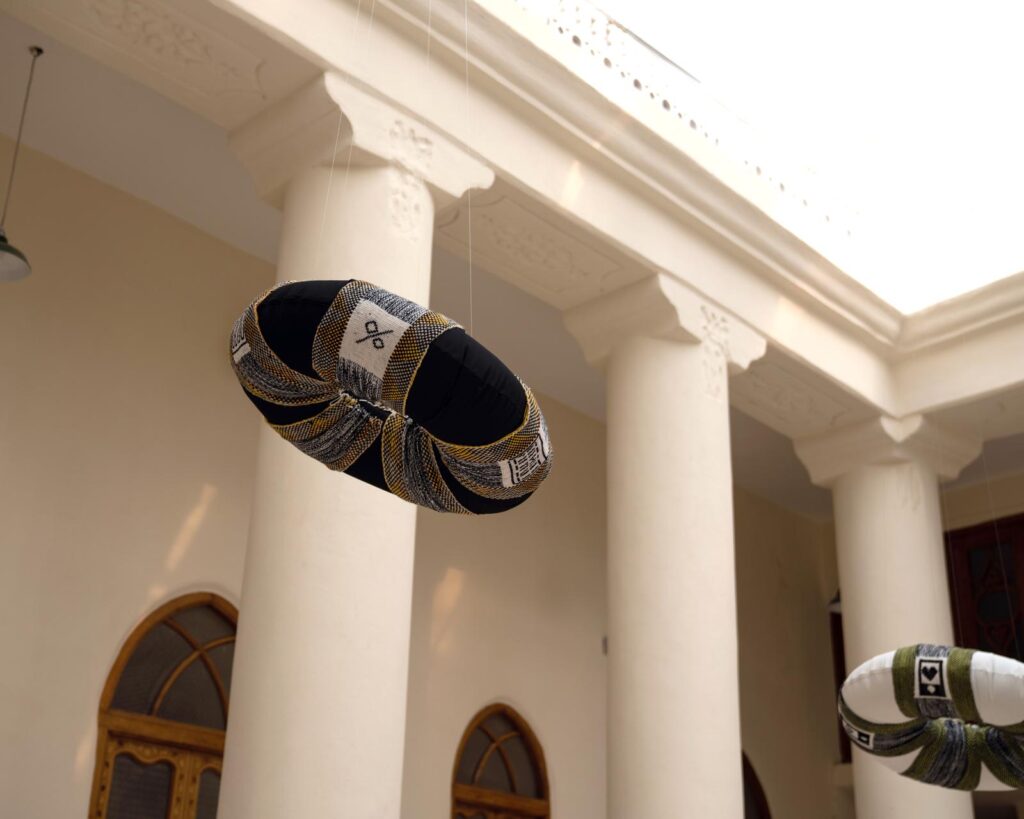
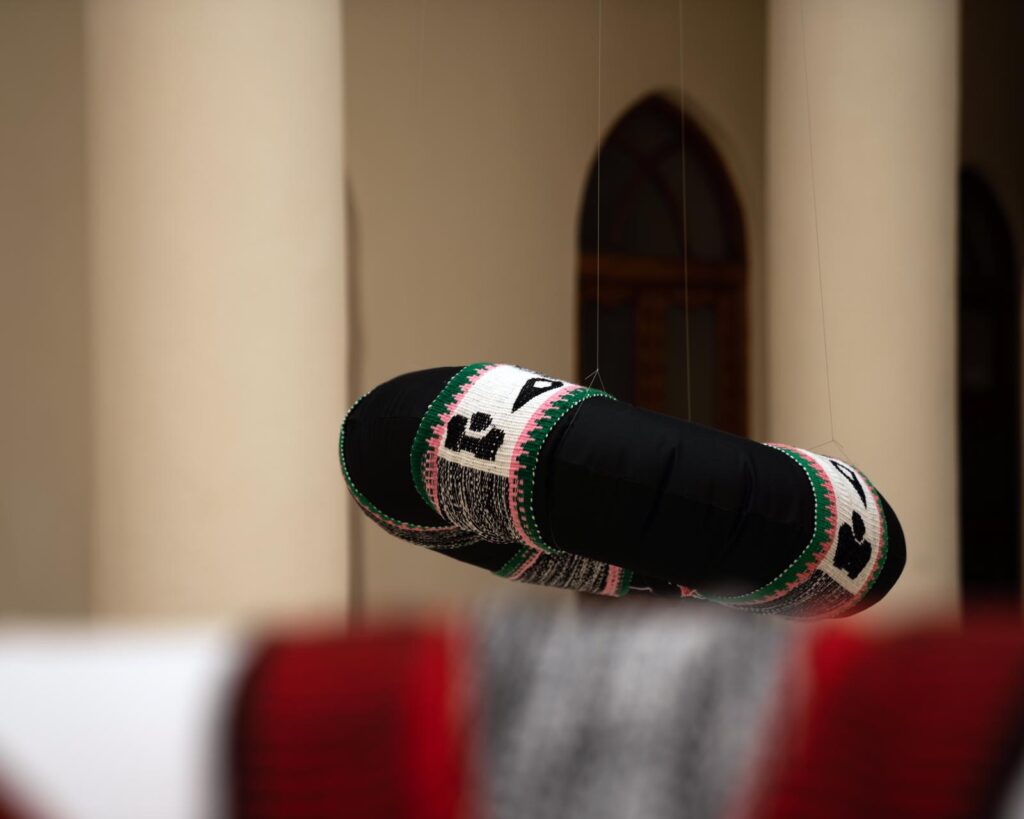
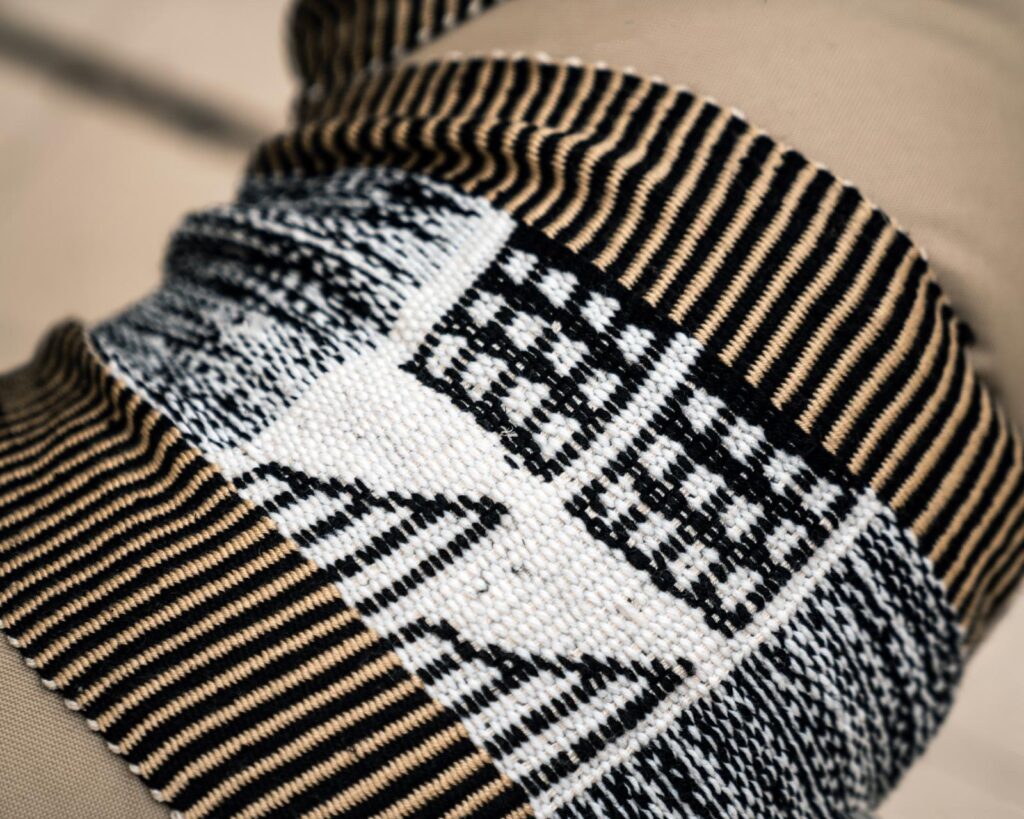
يمثل هذا التركيب الفني إعادة إحياء حرفة السدو وتصاميمه التقليدية بإضافة عنصري التجديد والمرح. ترمز العوامات إلى البقاء على قيد الحياة، وأيضاً إلى عنصر اللعب. هذا ما تحاول الفنانة بثه في مستقبل الحرفة من الناحيتين الجمالية والعملية
يدعو هذا العمل الفني المصممين والفنانين إلى إعادة التفكير في الطرق التي يتم فيها استخدام وتنفيذ نسيج السدو، وكذلك في اختيار القصص التي يسردها هذا النسيج. تقدم الفنانة أماني الثويني العوامات التي تحمل نقوشاً تقليدية برموز من اختيارها تعكس الطابع المعاصر في الحياة الكويتية الآنية، طالما كان السدو جزءاً مهماً يسرد البيئة المحيطة
In the installation, the artist questions the survival of Sadu and asks for its revival using playfulness. The float symbolizes leisure and play, as well as survival. This questions the functionality vs. display of the Sadu as a craft and invites artists and designers to rethink the way it is used and implemented as well as the choice of narratives it displays. It is also an invitation to go back to the preciousness of the handmade.
Each float combines a traditional Sadu pattern and a symbol of the artist’s choice, each symbol relates to the traditional pattern. The symbols were chosen as an attempt to resemble a Kuwaiti contemporary globalized living, as Sadu always represented the weaver’s landscapes or surrounding environment.
